

 English - EN
  繁體 - ZH-TW
  简体 - ZH-CN
  Español - ES
  日本語 - JA
  العربية - AR
  Русский - RU
  Français - FR

PRM What To Say
Original themed programs that include industry trends and insights allowing viewers to be up to date with the technology advances within the industry.
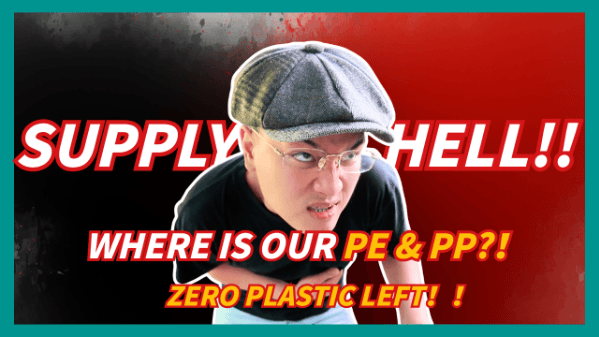
In 2026, these aren't just plastics anymore—they are gold. With the Middle East conflict and Red Sea pirates setting the global trading network on fire, your overseas orders are currently trapped in the middle of the ocean. Welcome to the WTS Industry Update. In this episode, Jason and Daniel break down the devastating 2026 plastic supply chain collapse. From the FCFC force majeure notice to Butadiene prices taking a steroid-fueled jump from $1,000 to $2,200 a ton—this isn't a price hike, it's a robbery! To make matters worse, the "Middleman Mafia" is hoarding raw materials like pandemic toilet paper, choking producers and bleeding consumers dry. When buyers are tearing their hair out over hostage-level material prices, yelling "we have the biggest capacity" is a dead marketing strategy. It's time to pivot. Watch to find out how you can survive this industry hell and secure your supply chain.

Ever been cut by a cheap plastic spoon? Ouch! That sharp, extra plastic sticking out is called "flash," and it's a major headache in the plastic injection molding industry.
In this episode of PRM What to Say, Evelyn and Daniel break down the mystery of injection molding flash.
Why does plastic leak out of the mold? It’s not always a broken machine! We dive into the 4 hidden culprits that cause flash, ruin your plastic products, and cost factories thousands of dollars.
Whether you are a B2B buyer, an engineer, or just someone who wants to save their lips from deadly spoons, this video is for you!
In this episode, we cover the 4 main causes of flash:
1. Pressure Imbalance: Pushing the plastic too hard or not clamping the mold tight enough.
2. Mold Wear: Old, worn-down steel molds that no longer align perfectly.
3. Awful Mold Design: Trapped air creating pressure and pushing the mold open.
4. Material Issues: Plastic that's too runny due to moisture or too many additives. Master these 4 elements, and you can get perfect plastic products every time!
Stay Connected with PRM: Leave a comment below if you've ever struggled with mold flash! What’s your best tip for preventing it?
Don't forget to LIKE, SUBSCRIBE, and hit the notification bell so you never miss an episode of PRM What to Say!
Every perfect shot starts with precision engineering. In this video, we take you inside the manufacturing journey of a golf ball — from the resilient rubber core to the durable plastic outer shell. Watch how advanced molding machines, material processing systems, and pad printing technology come together to shape every ball with accuracy and consistency. You'll see how multi-layer construction enhances performance, how dimples help stabilize flight, and how automation ensures uniformity from core to cover. Whether it's molding, printing, or aerodynamic design, every detail is crafted by machines built for precision. This is the engineering behind every swing. This is how machines shape every shot. Powered by Taiwan's leading machinery manufacturers, and brought to you by PRM-Taiwan — your trusted platform for discovering top suppliers and cutting-edge plastic & rubber processing solutions.

It's a great honor for PRM to share the observations of the Turkish market, including the economy, cultural influences, industry trends, investment opportunities, etc.
To know more about the Turkish market, watch the video!
Bangladesh has a rich, diverse culture. Its deeply rooted heritage is thoroughly reflected in its architecture, dance, literature, music, painting and clothing. For this episode, we’re going to talk about Bangladesh culture and tips on the operating market. Let PRM Cicilia share her insight and observation about Bangladesh Market!
Do you understand different kind of plastic recycling machines? Each type of plastic could be processed by certain type of machine. If you are still confused in choosing machines for your business, you must watch this video.
Have you ever wondered why Taiwan is an automation and automotive parts manufacturing stronghold? In this episode, you will be explaining the first two streams, which are upstream and midstream, which are the initial points for the following procedure of the automotive industry.
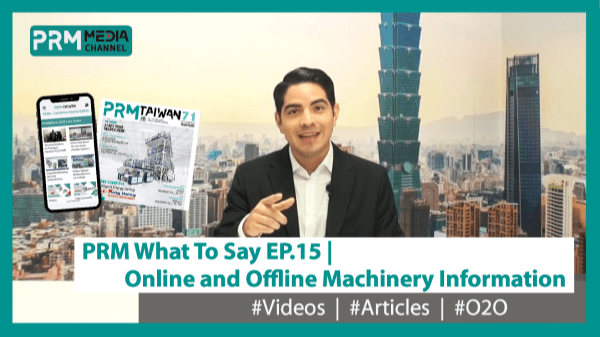
In this episode, we will uncover a series of online and offline information about machines and manufacturers related to the Plastics and Rubber Industry. Due to the pandemic many international exhibitions have been cancelled, postponed or even transformed into a digital exhibition. This has led us to become victims of the ones who attend international exhibitions.
Nevertheless, for every challenging time there's always an opportunity to develop and become better. Following this philosophy we have brought a solution for the international companies in the related field who have been affected by the current situation. Check the video above to know more about the solutions we bring to the ones who are passionate about attending international exhibitions!
Climate Change, Extreme Weather, Greenhouse Gas Emissions and Plastic Reduction, those topics have been discussed for many years. What should we do to help the environment better? Starting not to use the air-conditioner, not to eat meats that might decrease a little.
Moreover, we could take action to use reusable materials, to reduce the frequency of ordering food delivery and use eco-friendly products. In this episode, we are conveying messages about the global warning to everyone that might lead you to think “What should we do for the Earth?”

In blow molding, hollow plastic components are formed through a producing process categorized into three main methods: injection, extrusion, and injection stretch blow molding.
In this episode of PRM What to Say, the plastic blow molding process is explained. Besides, we also mentioned some common benefits of the blow molding production method.
For more info and machine manufacturer info, you can refer PRM-TAIWAN Blow Molding Machine category at Blow Molding Machine Category
Since blow molding allows freedom for design and engineering, the range of applications that you can manufacture by blow molding is really wide. The automotive industry, Appliance components, Medical supplies and parts, Children’s toys, Packaging, Sporting Goods, and Industrial bulk containers are where we see blow molded products often.
The blow molding process is very suitable for automation. Especially using the robot technology for take out units and packaging offers the benefit of faster production. Besides that, you can also reduce labor costs by using automation.
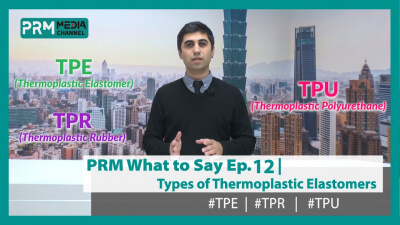
In this episode, we will open a special page for TPU and TPE, TPR materials. Because there are several common confusions about them. Then, let’s understand the differences and fields of application of those innovative materials together.
【TPE/TPR】 Both TPE(Thermoplastic Elastomer) and TPR(Thermoplastic Rubber) belong to the family of Thermoplastic Elastomers, and there isn’t a defined industry standard to distinguish them. But, it is certain that TPE is made from SEBS, while TPR is made from SBS block copolymers.
[TPE/TPR Applications] TPE/TPRs are great for anywhere that flexibility, comfort, or cost savings are needed. They are a top choice for medical applications like surgical and dental tubing and also tubing used in the food/beverage industry.
【TPU】 TPU(Thermoplastic polyurethane ) is a soft polyether type polyurethane that is available in a range of hardness grades, which gives a diverse application range to TPU. There are two main types based on soft segment chemistry: Polyester-based TPUs, and Polyether-based TPUs.
[TPU Applications] With their resistance properties, TPU is superior for use anywhere that ozone, extreme temperatures, and high levels of abrasion are a concern. In addition to medical uses, TPU is also a popular material for sporting goods, tubing, wire, protective coatings, and more.
All those materials above are alternatives for natural rubber and are easy to manufacture. Moreover, those materials can be 100% recycled.
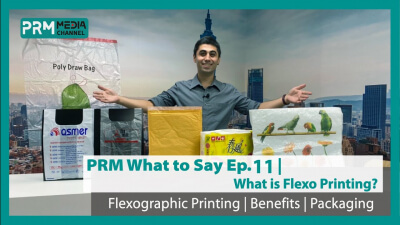
There are several types of printing techniques available for the plastic packaging industry. Such as flexo printing, offset printing, and screen printing. Although flexo printing is not a new technology, it is the most common method for packaging printing. Then let’s take a glimpse of the video to understand what flexo printing is and what makes it most preferable.
Flexographic printing is a technique that uses a flexible printing plate. The plates are wrapped around cylinders on a web press. The inked plates have a raised image and rotate at high speeds to transfer the ink through small holes from the anilox roll to the substrate, which is the printed surface.
So, what makes flexo printing the most common method? You will find 5 reasons why in the video.