

 English - EN
  繁體 - ZH-TW
  简体 - ZH-CN
  Español - ES
  日本語 - JA
  العربية - AR
  Русский - RU
  Français - FR
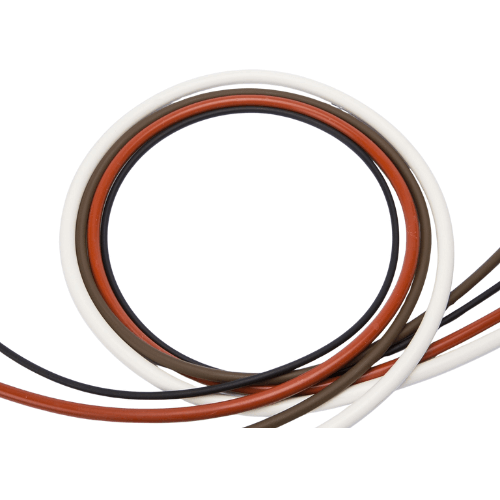
Rubber Cord Overview
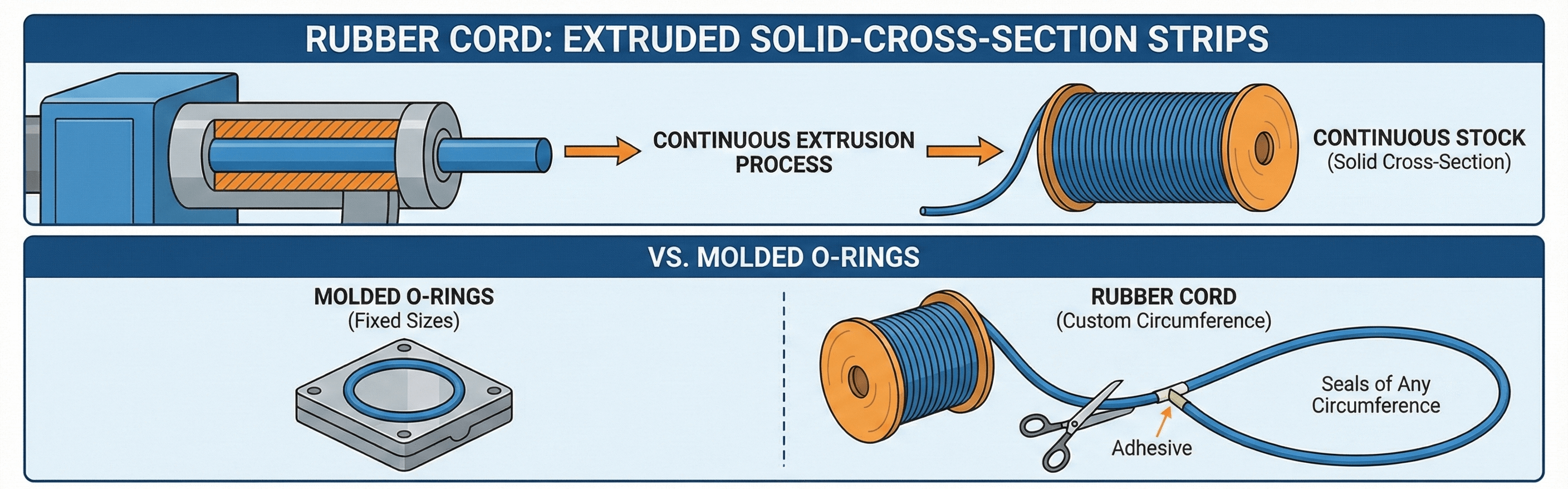
A Rubber Cord is a solid cross-section extruded strip, often used for sealing, filling gaps, or shock proofing. Unlike molded O-rings that come in fixed sizes, rubber cords are supplied as continuous stock, allowing for the creation of seals with virtually any circumference.
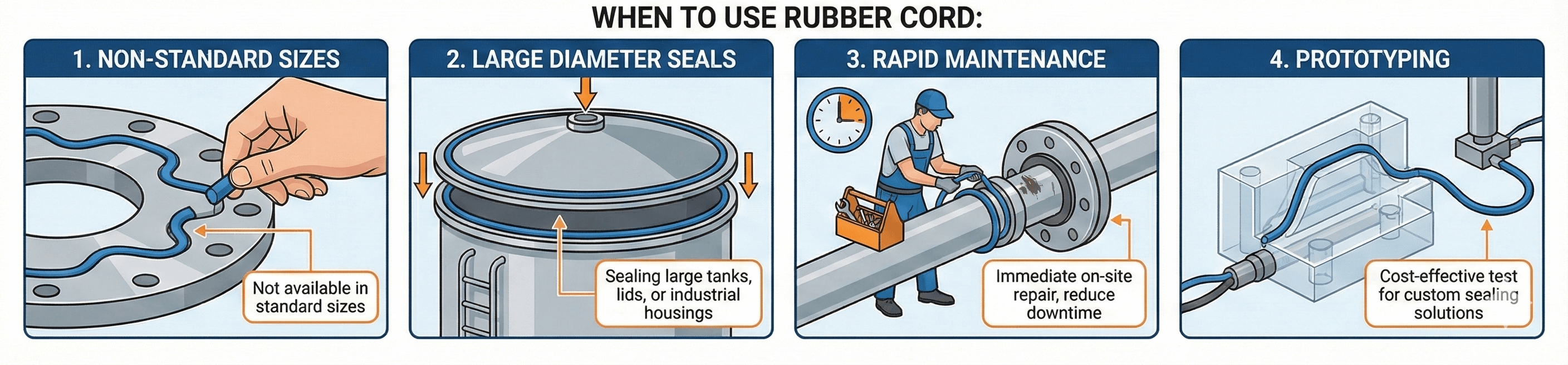
➤When to Use Rubber Cord
When standard O-ring dimensions are not available in the market.
Ideal for sealing large tanks, lids, or industrial housings.
Enables immediate on-site repair and replacement to reduce downtime.
A cost-effective way to test custom sealing solutions before investing in molds.
Key Benefits of Using Cord Stock
Industrial-grade rubber cords provide strategic advantages for both production and maintenance:
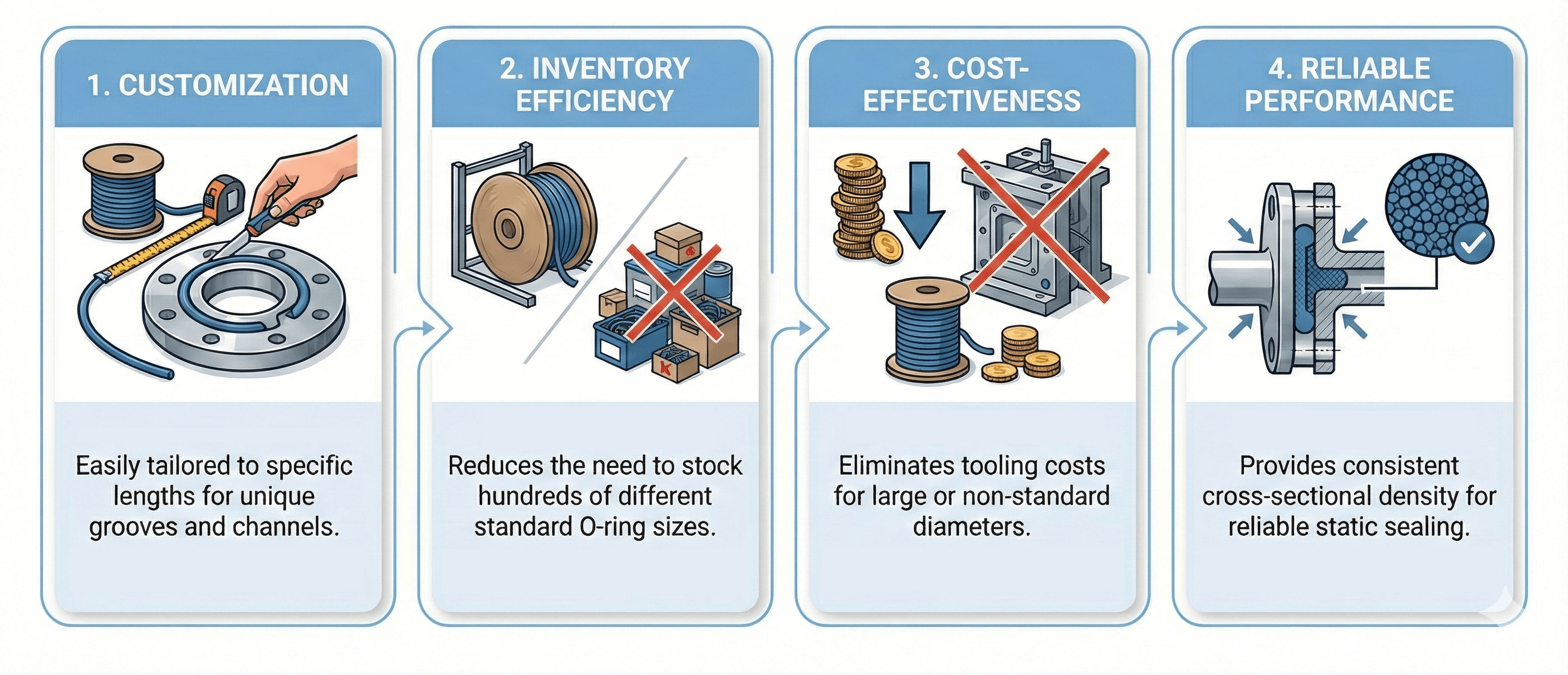
Easily tailored to specific lengths for unique grooves and channels.
Reduces the need to stock hundreds of different standard O-ring sizes.
Eliminates tooling costs for large or non-standard diameters.
Provides consistent cross-sectional density for reliable static sealing.
Material Science & Engineering
Our rubber cords are available in a wide range of elastomer compounds to ensure compatibility with various operating environments:
Common Elastomer Materials Overview
| Material | Key Properties | Recommended Media | Not Recommended | Typical Applications |
|---|---|---|---|---|
| NBR Nitrile | Excellent resistance to oils, fuels, and grease. | ✔ Hydraulic fluids, Petroleum, Oils. | ✘ Ozone, Ketones, Strong Acids. | General industrial sealing, fuel systems. |
| EPDM Ethylene Propylene | Superior resistance to UV, ozone, and water. | ✔ Steam, Outdoor exposure, Water. | ✘ Petroleum oils, Fuels. | Weather stripping, outdoor seals. |
| Silicone VMQ | Wide temperature stability & food-grade options. | ✔ Medical, Food processing, High-heat apps. | ✘ Fuels, Mechanical abrasion. | Food & beverage, medical devices. |
| FKM Viton® | Extreme chemical and high-temperature resistance. | ✔ Aggressive chemicals, Aerospace, Oil & Gas. | ✘ Steam, Ketones, Low temps. | Chemical processing, high-temp seals. |
| Neoprene CR | Balanced mechanical strength & weather resistance. | ✔ General engineering, Marine environments. | ✘ Strong acids, Aromatic solvents. | Marine seals, HVAC, vibration mounts. |
Industrial Applications
Rubber cords are foundational components utilized across multiple sectors, providing versatile sealing solutions for critical infrastructure:
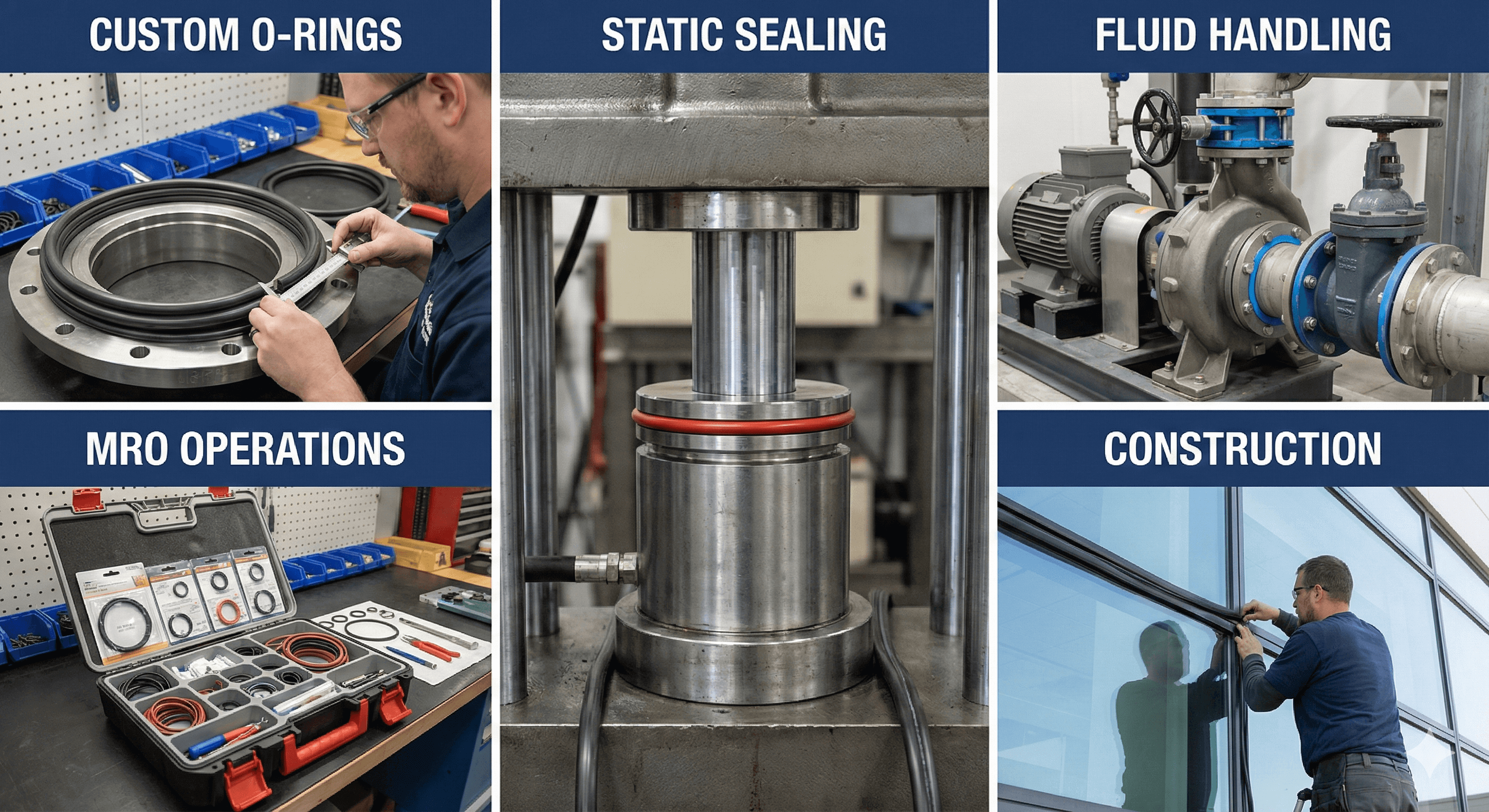
➤Custom O-Rings
On-site fabrication of endless seals for various diameters.
➤Static Sealing
Filling grooves in heavy-duty machinery and equipment.
➤Fluid Handling
Sealing for pumps, large valves, and pipe connections.
➤MRO Operations
A staple material for Maintenance, Repair, and Overhaul kits.
➤Construction
Providing weather-proof seals for large-scale outdoor structures.
Rubber Cord FAQ
Extruded Sealing Solutions & Selection Guide
Q1: What is rubber cord?
Q2: Rubber Cord vs. Molded O-Ring
| Feature | Rubber Cord | Molded O-Ring |
|---|---|---|
| Supply Form | Continuous Length | Fixed Size |
| Flexibility | Unlimited Diameters | Standard Sizes |
| Joint Type | Bonded or Vulcanized | Seamless (One-piece) |
| Ideal Use | Static / Large Seals | Dynamic / High Pressure |
Q3: Common Materials
Q4: Joining Methods
Quick and convenient using cyanoacrylate (super glue). Best for MRO and on-site repairs.
Uses heat and pressure to fuse ends. Creates a stronger, more permanent joint closer to molded strength.
⚠️ Important: Not for Dynamic Sealing
Rubber cord is not recommended for dynamic applications (continuous movement). It is designed for static sealing where the joint remains stationary.
Q5: How to choose & Customization
Selection factors: Diameter, Temp, Chemicals & Pressure. We supply custom solutions for:
- Industrial Machinery
- Pumps & Valves
- MRO & Automotive
- Food Processing
- Custom Tolerances
- Specific Compounds
- FDA / RoHS / REACH