


 English - EN
 繁體 - ZH-TW
 简体 - ZH-CN
 Español - ES
 日本語 - JA
 العربية - AR
 Русский - RU
 Français - FR



Regulador de la relación de presión del aire (0-103bar)
CATEGORÍAS : Equipos de Detección, Monitorización e Inspección
Serie del producto:QKL-B1T+QKL-BPF Regulador de presión electrónico B1T Proporciona una señal de pilotaje de aire a la cúpula del amplificador de volumen de aire. Al controlar la presión hacia la parte superior del diafragma, controlamos la presión de salida del amplificador de volumen. Regulador de la relación de presión del aire El regulador de relación de alta presión de KaoLu se utiliza principalmente en entornos de alta presión, en los que los usuarios están acostumbrados a utilizar el regulador de presión de aire mecánico. Utilizando nuestro conjunto regulador de relación de alta presión, ahora es posible regular electrónicamente la alta presión de un entorno potencialmente peligroso utilizando el control como la comunicación serial RS485-modbus. Utilizando el método de carga de cúpula controlado por nuestro regulador de presión electrónico, los usuarios pueden alcanzar una presión de hasta 3000 psig (210 bar) con una resolución de hasta 5 psig (0,3 bar). Además, nuestro regulador de relación de alta presión no sólo funciona con aire, el nuevo regulador de relación desarrollado es compatible con diferentes fluidos como el agua y la presión de vapor de alta temperatura. Se puede elegir entre retroalimentación de bucle simple o retroalimentación de sensor externo. Con la retroalimentación de bucle simple, en la que nos aseguramos de que el aire de pilotaje cargado en la cúpula es el mismo, el inconveniente es que no se controla la presión de salida del regulador de alta relación de presión. La precisión suele ser de unos 2-3% con este método. En un escenario diferente donde un sensor externo fue montado en el regulador de relación o montado remotamente aguas abajo del regulador de relación de alta presión, podemos asegurar que se logre una alta precisión. Haga clic en el siguiente enlace para solicitarlo: Curado de neumáticos

MEMS Gas Mass Flow Meter 0-1000L/min
CATEGORÍAS : Válvulas y colectores (bloques de válvulas)
KMF1000 series digital gas mass flow meter is made of micro- electromechanical system (MEMS) flow sensing chip, suitable for a variety of purposes of clean, relatively dry nature of the small flow gas measurement and process control, unique packaging technology makes the product to meet the different ranges of flow measurement, to ensure high sensitivity, high reliability, high stability and low cost. It is based on a MEMS flow sensing unit and a high precision digital processing and calibration circuit (MCU). The integrated Δ-Σ A/D converter and the logic circuit with internal calibration function and MCU processor together ensure the real-time effective acquisition of the sensing signal, to obtain the accurate flow signal, and the corresponding compensation algorithm processing in the internal, so there is no need to do any external calibration and compensation to ensure high-precision.

Flujo alto con refuerzo de volumen (0-10bar)
CATEGORÍAS : Equipos de Detección, Monitorización e Inspección
1. Regulador de presión electrónico QKL-B1T Proporciona una señal de pilotaje de aire a la cúpula del amplificador de volumen de aire. Mediante el control de la presión a la parte superior del diafragma, controlamos la presión de salida del amplificador de volumen. QKL-B1T tiene la característica de alta resolución y rápido tiempo de respuesta, que es muy adecuado para actuar como la presión piloto. 2. Refuerzo del volumen de aire Also known as the dome-loaded or pilot-operated pressure regulator. Puede ser una válvula reductora de presión o una válvula de contrapresión. Disponemos de muchos reforzadores de volumen que pueden manejar diferentes presiones, medios y caudales.

Amasadora de tipo abierto de doble brazo
CATEGORÍAS : Equipos de mezclado y compounding de caucho
La amasadora de doble brazo KD está disponible con una variedad de cuchillas en diferentes formas, así como con varios métodos de descarga y condiciones de mezclado. Esta amasadora de brazo doble KD ya ha alcanzado considerable renombre en una amplia gama de industrias que se ocupan de materiales de viscosidad alta y media como adhesivos, aglutina materiales magnéticos y mezcla de materiales químicos.
Fibre Grade PET Cleaning System with Automation
CATEGORÍAS : Líneas de reciclaje por aplicación
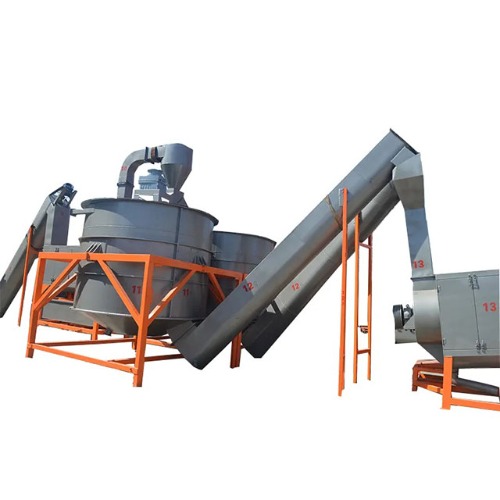
Automatic Fibre-Grade PET Bottle Washing Recycling Line The automatic fibre-grade PET bottle washing recycling line is an integrated plastic recycling system designed to convert post-consumer PET bottles into clean,high-quality recycled PET flakes suitable for polyester fiber production.The line combines automatic material handling,efficient bottle separation,intensive washing,contaminant removal,mechanical dewatering,thermal drying,and final flake classification in one continuous process. Built for high-throughput plastic recycling plants,this recycled bottle to fiber production line helps processors recover valuable PET from discarded beverage bottles and transform it into a consistent secondary raw material for applications such as staple fiber,filament yarn,nonwoven fabrics,strapping,and other polyester products. Product Overview PET bottles typically contain labels,caps,rings,adhesives,dirt,moisture,and other contaminants that must be removed before the material can be reused.The automatic fibre grade PET bottle washing line is engineered to separate and clean these components while minimizing PET loss and preserving the quality of the recovered polymer. After processing,the fibre grade PET bottle recycling line produces washed PET flakes with controlled moisture,reduced contamination,and stable bulk density.The final product is commonly used as feedstock for polyester fiber manufacturing and other non-food-grade PET recycling applications. Typical Processing Flow The complete fibre grade PET bottle washing line may include the following stages: 1.Bottle Bale Opening and Feeding Compressed PET bottle bales are loaded into a bale breaker or bale opener.The equipment loosens the bottles and feeds them continuously to the sorting section. 2.Pre-Sorting and Manual Sorting Operators or automated sorting equipment remove PVC bottles,metal objects,heavily contaminated containers,hazardous materials,and other non-PET items.Effective sorting at this stage improves final flake quality and protects downstream equipment. 3.Label and Cap Separation A label remover machine separates loose and attached labels from the bottles.Caps and rings,which are typically made from HDPE or PP,are removed during the process through air separation,density separation,and washing. 4. Bottle Crushing A wet granulator or PET bottle crusher cuts the bottles into smaller pieces.Water may be introduced during crushing to reduce dust,control heat,and begin the initial rinsing process. 5. Pre-Washing The pre-washing section removes loose dirt,sand,beverage residues,and other surface contaminants before intensive cleaning. 6. Hot Washing PET flakes are washed in a heated solution that helps remove oils,adhesives,labels,organic residues,and stubborn contamination.The hot-washing system can be configured with detergent according to the incoming material and required output quality. 7. Friction Washing A high-speed friction washer applies mechanical scrubbing action to the flakes.This stage removes remaining dirt,glue,paper fibers,and surface residues while improving flake cleanliness. 8. Rinsing and Floating Separation Clean-water rinsing removes detergent and loosened contaminants.A float-sink tank separates PET flakes from lighter materials such as PP and HDPE caps,labels,and other low-density plastics. 9. Mechanical Dewatering A centrifugal dewatering machine removes most of the surface water from the washed flakes,reducing the energy required for thermal drying. 10. Thermal Drying Hot-air drying reduces residual moisture to a controlled level suitable for storage,packaging,or further processing. 11. Air Classification and Fine Separation Air separators remove lightweight labels,films,dust,and residual fines.Additional screens,magnetic separators,or metal detectors can be installed to improve product purity. 12. Flake Storage and Packaging The finished PET flakes are conveyed to a storage silo,cyclone,or jumbo-bag filling station for convenient handling and shipment. Key Features Fully Automatic Operation The fibre grade PET bottle recycling machine is designed for continuous operation with centralized controls for feeding,crushing,washing,conveying,drying,and packaging.Automated sensors and control systems help regulate material flow,water temperature,residence time,and equipment status. Designed for Fibre-Grade PET Flakes The washing and separation process is configured to produce clean PET flakes appropriate for polyester fiber production.The final quality depends on feedstock composition,sorting effectiveness,process settings,and the selected equipment configuration. Efficient Contaminant Removal The pet bottle to polyester fibre machine targets common PET bottle contaminants,including: - Labels and label adhesive - PP and HDPE caps and rings - Dirt,sand,and dust - Beverage residues - Oil and grease - Paper and organic matter - PVC and other incompatible plastics - Metal particles - Lightweight films and floating materials Integrated Hot-Washing Technology Hot washing in PET bottle cleaning system improves the removal of difficult contaminants that cannot be effectively eliminated through cold washing alone. Temperature,detergent concentration,washing time,and water circulation can be adjusted to meet different feedstock conditions. Reduced PET Loss The fibre grade PET bottle washing machine uses controlled conveying,density separation,and optimized washing stages to limit the loss of usable PET flakes.Proper equipment matching helps improve recovery rates and overall plant profitability. Water Recycling Capability A water-treatment and recirculation system can be integrated to reduce fresh-water consumption.The system may include settling tanks,filtration units,screw presses,dissolved-air flotation,and other treatment equipment depending on local regulations and the level of contamination. Modular and Customizable Configuration The fibre grade PET recycling machine can be customized based on: - Required production capacity - Bottle bale quality - PET contamination level - Desired flake cleanliness - Available factory space - Local utility conditions - Water-treatment requirements - Automatic or semi-automatic operation preferences Durable Construction Key components are manufactured from wear-resistant materials and corrosion-resistant stainless steel where appropriate.High-wear areas,such as crushers,friction washers,screw conveyors,and dewatering machines,can be equipped with replaceable wear parts to simplify maintenance. Stable Flake Quality Multiple separation and washing stages help achieve a consistent output in terms of cleanliness,particle size,moisture content,and bulk density.Stable flake quality supports more reliable downstream fiber production. Main Equipment Configuration A typical automatic PET bottle cleaning system may include: - Bale opener or bale breaker - Infeed conveyor - Trommel or pre-sorting screen - Manual sorting conveyor - Magnetic separator - Label remover - Wet PET bottle crusher - Pre-washer - Hot-washing tank - Friction washer - Float-sink separation tank - High-speed friction washer - Dewatering machine - Hot-air drying system - Zigzag air separator - Vibrating screen - Metal detector - Conveying system - PET flake storage silo - Automatic bagging or jumbo-bag filling system - Electrical control cabinet - Water circulation and wastewater-treatment system The exact configuration can be adjusted according to the raw material and required product specifications. Output Applications The washed PET flakes produced by this fibre grade PET Cleaning system are suitable for use in the manufacture of: - Polyester staple fiber - Recycled polyester filament - Nonwoven fabrics - Hollow fiber filling - Recycled PET strapping - Engineering plastic compounds - Thermoformed PET products - Other non-food-grade recycled PET products For applications requiring particularly high purity or advanced polymer performance,additional equipment such as optical sorters,near-infrared separators,melt filtration,pelletizing systems,or solid-state polycondensation units may be added. Operational Benefits - Converts waste PET bottles into valuable recycled material - Supports high-volume,continuous plastic recycling - Reduces dependence on virgin PET resin - Helps lower landfill disposal and environmental pollution - Improves material recovery from post-consumer waste - Reduces manual labor through automated processing - Produces a saleable raw material for the textile and plastics industries - Supports more efficient use of water and energy when paired with recycling systems - Allows flexible integration into existing plastic recycling plants Quality and Performance Considerations The quality of fibre-grade PET flakes depends not only on the fibre grade plastic recycling equipment but also on the quality of the incoming bottles.Feedstock with excessive PVC,oil,dirt,multilayer materials,or non-PET plastics may require enhanced sorting and washing equipment. For best results,the plastic recycling plant should maintain: - Effective pre-sorting - Controlled hot-washing conditions - Proper separation of caps and labels - Regular water replacement or treatment - Correct crusher and screen settings - Routine removal of accumulated contaminants - Regular inspection of wear parts - Proper control of final flake moisture Ideal Applications This automatic fibre grade PET recycling machine is suitable for: - Plastic recycling plants - PET bottle recycling facilities - Polyester fiber manufacturers - Waste management companies - Material recovery facilities - Circular-economy projects - Industrial recyclers processing post-consumer PET bottles Product Summary The automatic recycled bottle to fiber production line provides a complete solution for processing used PET bottles into clean,reusable flakes for plastic recycling.With automated conveying,advanced washing,density separation,dewatering,drying,and optional water-treatment systems,the PET bottle washing line is designed to deliver reliable performance,efficient contaminant removal,and consistent fibre-grade PET output. It is an effective investment for plastic recycling plants seeking to increase PET recovery,improve product quality,reduce operating labor,and supply recycled raw materials to the polyester fiber and plastics industries. Fibre Grade PET Cleaning System with Durable Construction Special Design Automation Customization:https://www.petrecyclingmachinery.com/Fibre-Grade-PET-Cleaning-System-with-Durable-Construction-Special-Design-Automation-Customization-pd533023348.html PET Bottle Washing Line Manufacturer - Haorui Machinery:https://www.petrecyclingmachinery.com/PET-Bottle-Washing-Line-pl43660357.html Plastic Recycling Machines & Solutions - Haorui Machinery:https://www.petrecyclingmachinery.com/products.html PET Bottle Recycling Machine & Plastic Crusher - Haorui Machinery:https://www.petrecyclingmachinery.com


Reductor de engranaje para máquina de moldeo por inyección eléctrica
CATEGORÍAS : Transmisión, Motores y Sistemas de Accionamiento
(1) El reductor de engranajes TGSM adoptó un diseño particular y un método de fabricación que es adecuado para un entorno de operación de alta velocidad de torsión y alta torsión. A favor de menos abrasión y bajo nivel de ruido para mejorar la alta eficiencia de transmisión. (2) TGSM toma reducciones de tres pasos entre el EJE DE ENTRADA (lado del motor eléctrico) y el EJE DE SALIDA (tornillo de accionamiento y lado del tubo conectado). Simplemente se incrusta correctamente en el espacio donde el motor cubierto, el reductor de engranajes y el tornillo se conectan con el tubo entre la distancia del eje de entrada y del eje de salida. Este diseño tipo U ocupó menos espacio pero optimizó la eficiencia del uso del espacio. (3) El diseño de todos los elementos del engranaje siguió el criterio AGMA (la fabricación estándar DIN y JIS también está disponible), elementos del engranaje hechos con el material de la barra de acero aleado con bajo contenido de carbono (llamado SCM420 en general). Después del tratamiento térmico de carburación, luego se transfiere a la fabricación de rectificado de engranajes para alcanzar el estándar de AGMA nivel 10 y superior para garantizar la característica de bajo nivel de ruido, menos abrasión y alta eficiencia.

RECUBRIMIENTO MUERA RANURA / RANURA
CATEGORÍAS : Troqueles y cabezales de extrusión
Diseño de ranura / hendidura, excelente diseño de geometría múltiple, aleación resistente a solventes, técnica de rectificado de súper espejo

Extrusora de doble husillo - Tipo contrarrotatorio
CATEGORÍAS : Transmisión, Motores y Sistemas de Accionamiento
(1) Los tipos de reductores de engranajes de doble tornillo de la serie TB de corotación y contrarrotación están compuestos por elementos de entrada y salida. Especialmente para el lado de salida que instaló Thrust Bearing plus con brida que podría sufrir una alta presión para absorber la presión axial causada por las extrusoras. (2) Siguiendo el criterio AGMA para diseñar elementos de engranajes que adoptan materiales de barra de acero aleado con bajo contenido de carbono (normalmente, es SCM420 o del mismo nivel). La precisión alcanza el nivel AGMA 10 después del tratamiento térmico de carburación y luego trata el rectificado de la superficie del engranaje para garantizar un bajo nivel de ruido, baja abrasión y alta eficiencia durante la operación. (3) Cojinete de empuje de la serie n.° 294 con rodillos axiales autoalineables y paquete de cojinetes en tándem apilados de hileras múltiples para aprovechar la capacidad de carga axial pesada de baja fricción.

Tipo giratorio Co - Extrusora de doble tornillo
CATEGORÍAS : Transmisión, Motores y Sistemas de Accionamiento
(1) Los tipos de reductores de engranajes de doble tornillo de la serie TB de corotación y contrarrotación están compuestos por elementos de entrada y salida. Especialmente para el lado de salida que instaló Thrust Bearing plus con brida que podría sufrir una alta presión para absorber la presión axial causada por las extrusoras. (2) Siguiendo el criterio AGMA para diseñar elementos de engranajes que adoptan materiales de barra de acero aleado con bajo contenido de carbono (normalmente, es SCM420 o del mismo nivel). La precisión alcanza el nivel AGMA 10 después del tratamiento térmico de carburación y luego trata el rectificado de la superficie del engranaje para garantizar un bajo nivel de ruido, una baja abrasión y una alta eficiencia durante la operación. (3) Cojinete de empuje de la serie n.° 294 con rodillos axiales autoalineables y paquete de cojinetes en tándem apilados de hileras múltiples para aprovechar la capacidad de carga axial pesada de baja fricción.