

 English - EN
  繁體 - ZH-TW
  简体 - ZH-CN
  Español - ES
  日本語 - JA
  العربية - AR
  Русский - RU
  Français - FR
FIMIC: Filtration Technology for PET Recycling
PolyEthyleneTerephthalate or simply PET, is one of the most recyclable plastics, widely used world-wide in many different applications. Light, strong, durable and safe, PET offers a number of advantages being almost uniquely among plastics. Because of PET’s incredible performance and recyclability it is one of the most sustainable packaging materials. It is in fact approved as safe for use in direct food contact all over EU, as well as many other Countries, both in virgin or recycled form. Its uses vary from food, beverage, pharmaceutical and medical sectors, clothing, automotives, outperforming other plastic packaging. 70% of carbonated soft drinks, fruit juices, dilutable drinks and bottled water are made of PET.
PET is near-infinitely recyclable and because it can be made into new products, lowers the need for virgin PET, reducing CO2 emissions and helping to achieve a fully circular economy. Recycled PET products show a drop of up to 90% in CO2 emissions compared to virgin PET.
Most major brands using plastics in their supply chains have started to evaluate their carbon footprint and take mitigating actions like packaging redesign and light-weighting, reducing the use for virgin plastics, increasing reusability, and setting targets for minimum recycled plastic content. As brands strive to meet their targets, they are collectively expanding demand and increasingly competing for available rPET. Another factor driving the demand for and supply of rPET are the new regulations and taxes on packaging made from virgin plastics / single-use plastics packaging.
Rising rPET demand and prices are incentivizing investments in new recycling capacity – Europe has seen a 21% increase in the installed capacity for PET recycling - according to a report by Plastics Recyclers Europe, PETCORE Europe, Natural Mineral Water Europe (NMWE), and UNESDA Soft Drinks Europe - at the same time global rPET capacity is forecast to boom over the next five years.
This“run”towards ever increasingly demand for rPET, has led producers of PET packaging products (both food grade and non-food grade applications) to look for more contaminated sources of PET waste.
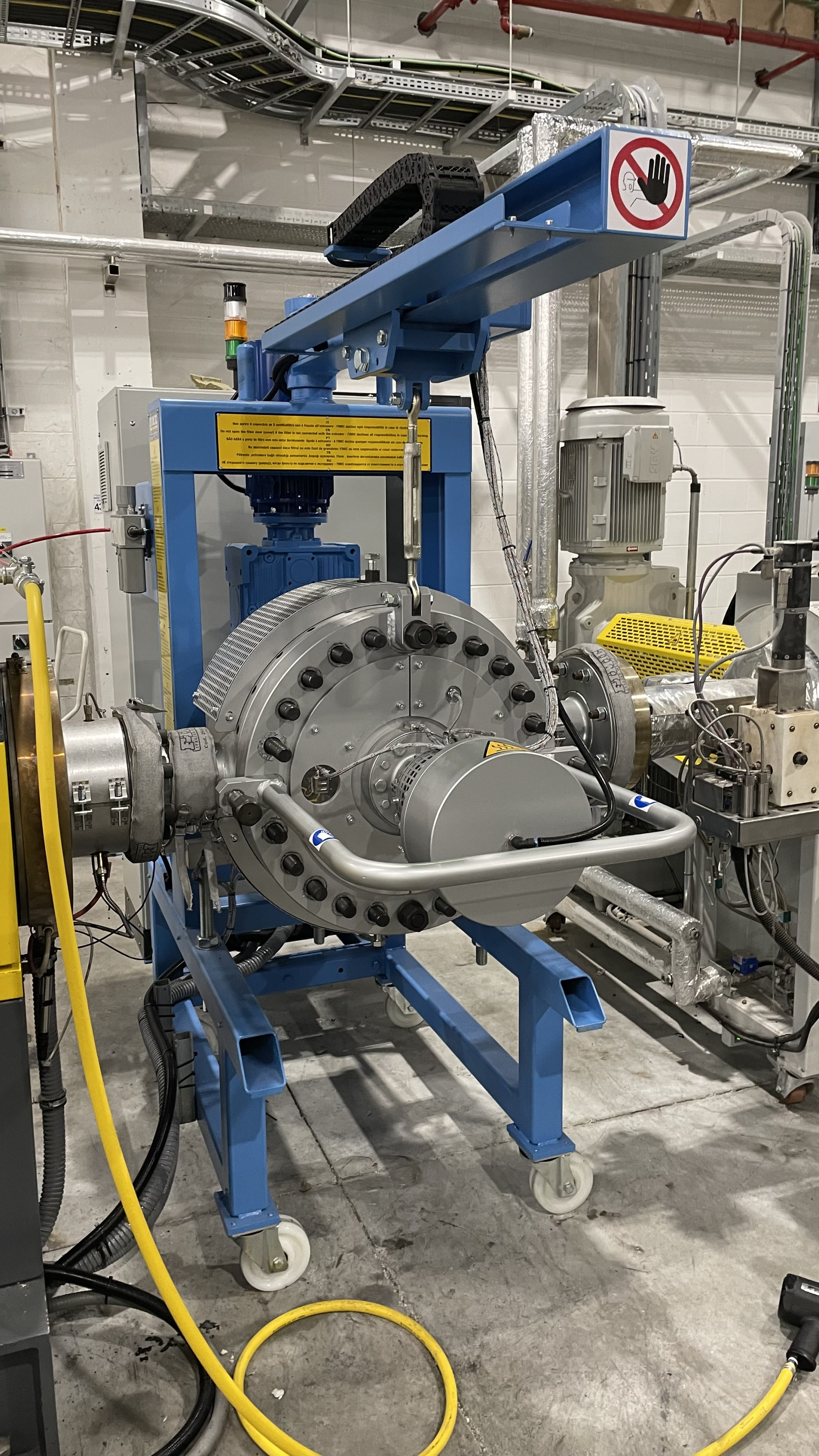
FIMIC’s melt filters are recognized as one of the best filtration technologies dedicated to contaminated post-consumer plastics; to reach high quality recycled plastics from more contaminated waste streams, automatic technologies are needed to filter out impurities and contaminations from the melt flow. FIMIC has been working many years now on improving its filtration technologies in order to meet and satisfy the needs (ever increasing quality needs, different materials characteristics) of recyclers, and expanding its technology to applications that previously did not require the use of continuous scraping melt filters such as, precisely, PET.
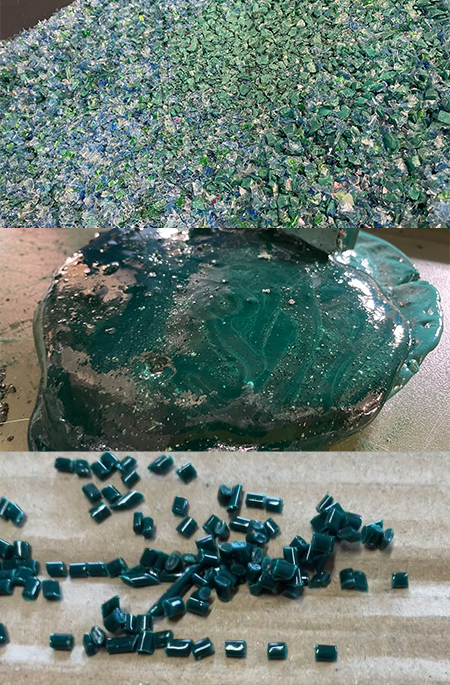
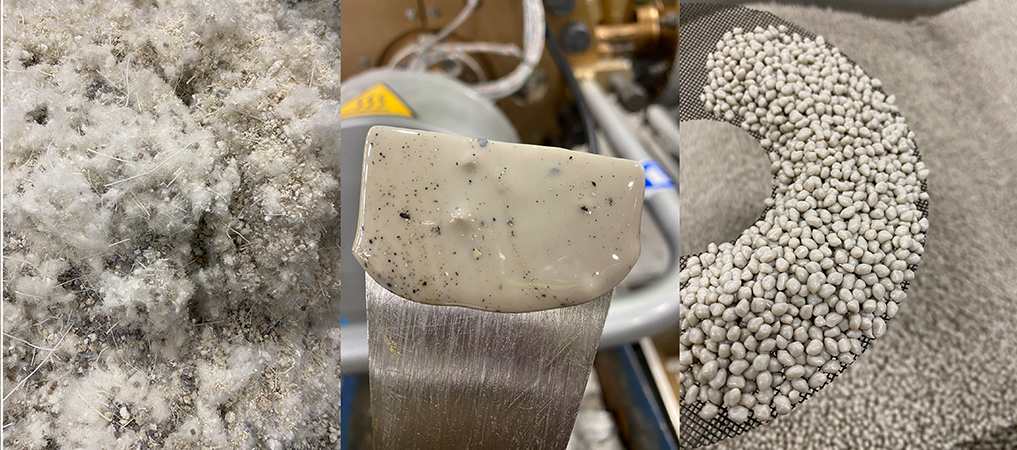
FIMIC has already installed two units (RAS-type filters) on PET recycling lines to work with more contaminated PET waste streams, i.e. not coming from hot-washed bottle flakes only, such as for example PET lumps from petrochemical waste or from strapping production, waste fibers as well as PET straps. In these cases the contamination of the input material was way higher than the typical “ppm” contaminations used for food grade applications, reaching levels as high as 5%. The benefits and the advantages of a continuous scraping filtration were significant. Dedicated to different end applications, these filter units are working with an excellent performance and great quality results in both cases: as a pre-filter in the first project (applied filtration is 150 or 120 micron on laser screen) and as the only filtration step in the second one (applied filtration is 80 micron on laser screen). The respective output performances are 2.000 kg/h and 700 kg/h, at very different and sometimes inconsistent iV levels.
At the same time, FIMIC has increased the amount of units installed for the recycling of soft PVC and, also in this case FIMIC melt filters are confirmed to be a winning choice due to the sensitivity of the PVC during the recycling process, as it allows the material to flow without stagnating and therefore without degrading. Most recently, FIMIC has been testing an alternative solution to be applied to hard PVC which we know is one of the most degradation-sensitive as well as the stiffest material in the recycling market.
The continuous research for innovation and passion for improvement keep FIMIC constantly growing and developing innovative technologies and tailored solutions in an increasingly demanding market to achieve its mission worldwide: the protection of the environment through the proper recycling of plastic and its optimal reuse.
FIMIC will be for the third time at Chinaplas 2023, stand 10H87, sharing its experience, gained over 25 years in the plastic recycling market, and its knowledge about recycling processes and what is really needed for efficient plastic recycling as part of a circular economy. FIMIC filtration technology is capable to target highly contaminated plastic materials, especially post-industrial and post-consumer plastics, being the only one in the market with a range of 5 different models of automatic melt filters. Offering all possible filtrations and covering the many different existing applications to guarantee high results and a very high quality of the final material.

SOCIO COOPERATIVO