

 English - EN
  繁體 - ZH-TW
  简体 - ZH-CN
  Español - ES
  日本語 - JA
  العربية - AR
  Русский - RU
  Français - FR
The Great Pivot: Poland’s Ascent and the Survival of European Plastics
By: Jason Wu
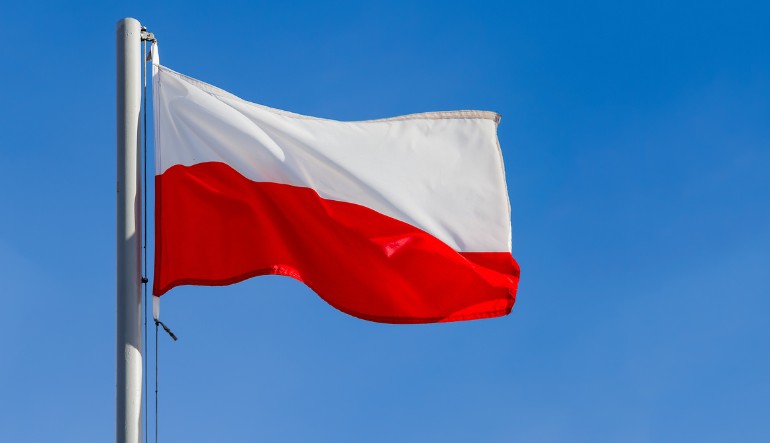
As the Targi Kielce exhibition center prepares to host the 30th anniversary of Plastpol this May, the atmosphere is far from just celebratory. It is clinical. In the three decades since its inception, Plastpol has transformed from a local trade fair into the definitive strategic outpost for the European plastics industry. In 2026, it serves as a high-stakes arena where global machinery manufacturers must answer a singular question: How does a traditional industry survive in a high-cost, hyper-regulated, and geopolitically fractured Europe?
The Industrial Heartbeat Moves East
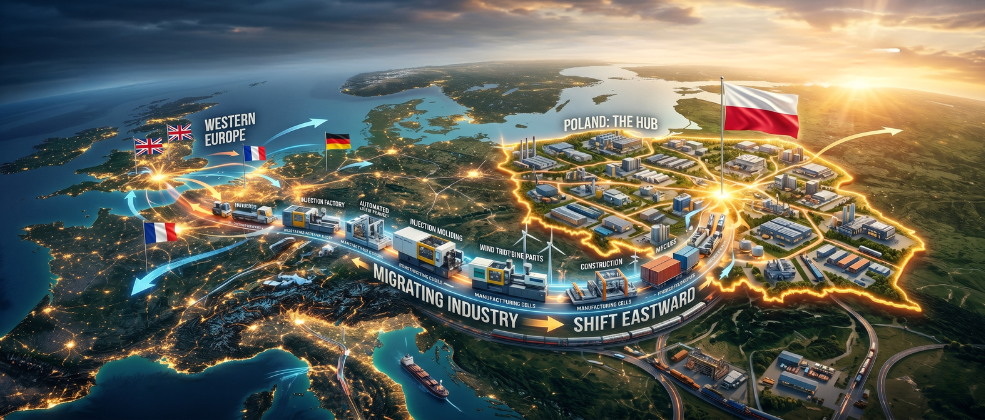
The macro-economic data is sobering. Western Europe’s share of global plastic production has undergone a staggering collapse, falling from 22% in 2006 to just 12% in 2024. This de-industrialization crisis—fueled by soaring energy costs and the "Green Deal" regulatory burden—has created a vacuum. Yet, within this shadow, Poland has emerged as a resilient manufacturing hub.
Poland is no longer just a low-cost alternative; it is the "Packaging Capital" of the continent. Producing over 6 million tons of packaging materials annually, the sector represents 3.4% of Poland's total industrial processing—nearly double the EU average. With 60% of this demand anchored in the non-cyclical food industry, Poland offers a "safe harbor" for machinery investors. By 2028, sales of Polish plastic products are projected to hit €26.5 billion. For the hundreds of exhibitors from 30 countries descending on Kielce, the mission is clear: capture the Polish market, or lose the European foothold entirely.
Beyond Hardware: The Processing Platform Era
The era of selling "dumb iron" is over. The primary driver at Plastpol 2026 isn't just speed; it’s the Packaging and Packaging Waste Regulation (PPWR) and the looming EU Plastics Levy. These mandates have forced a fundamental redesign of machine logic.
Processing Post-Consumer Recycled (PCR) material is an engineering nightmare. PCR is inherently unstable—its viscosity fluctuates, and impurity levels are high. Consequently, we are seeing the rise of "Processing Platforms." Industry leaders like ENGEL and WITTMANN are no longer just showcasing clamping forces; they are touting AI-driven ecosystems. ENGEL’s iQ weight control and WITTMANN’s Feedmax Clean dust removal systems are designed to treat recycled material as a variable to be managed in real-time, rather than a fixed input. This allows manufacturers to utilize lower-grade recyclates for high-end medical or automotive parts without sacrificing Yield or OEE (Overall Equipment Effectiveness).
The "Shorter Footprint" Revolution
A distinct trend at this year’s show is the obsession with "Productivity per unit area." In a Europe where industrial rent and construction costs are prohibitive, the physical footprint of a machine has become a financial liability.
Taiwanese powerhouse FCS (Fu Chun Shin) has pivoted brilliantly here with its SA-350 series. By redesigning the toggle structure to shorten the machine body by 15-20% without losing clamping force, they are speaking the direct language of the European plant manager. This is "Smart Efficiency"—achieving a 7.5-second cycle time for IML (In-Mold Labeling) packaging within a compact frame that integrates seamlessly with modular automation.
Intelligence as an Equalizer
For the PRM team, our reporting must focus on the "Double-Edged Sword" facing Asian manufacturers. While Taiwan’s ICT and AI sectors are booming, the traditional machinery export market has felt the chill of global economic cooling. However, this crisis is where the opportunity lies.
The labor shortage in Eastern Europe is permanent. The solution isn't more people; it’s more "Edge Computing." By integrating digital twins and predictive maintenance—standard features now for firms like Everplast—Asian manufacturers can overcome the "geographical distance" hurdle. If a machine in Kielce can be diagnosed and optimized via a digital twin in Tainan before a technician even wakes up, the barrier to entry vanishes.
The Strategic Outlook
Plastpol 2026 is the barometer for the "New Europe." The focus has shifted from what we make to how we manage the circularity of it. For the PRM media platform, our objective is to act as the bridge between the raw innovation of Asian engineering and the survivalist needs of the European molder.
The winners of 2026 won't be those with the cheapest machines, but those who provide the most "forgiving" technology—machines that can handle the messiness of a recycled world while fitting into the tight corners of a cost-conscious factory.

SOCIO COOPERATIVO