


 English - EN
  繁體 - ZH-TW
  简体 - ZH-CN
  Español - ES
  日本語 - JA
  العربية - AR
  Русский - RU
  Français - FR
Gear Up for Plastimagen 2026: Profitability is measured from the moment the mold is closed.
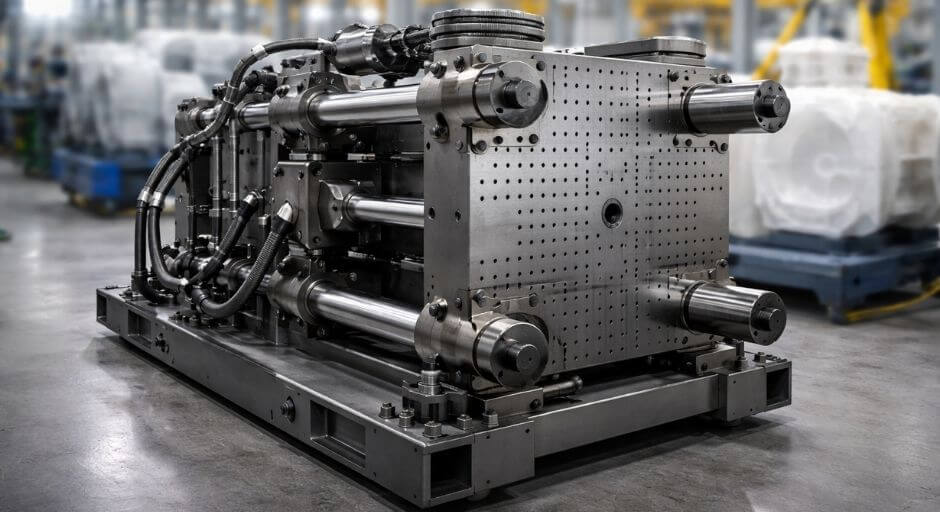
In a manufacturing machine, the clamping system not only provides strength: it determines rigidity, parallelism, and process stability. Understanding its architecture allows for predicting accuracy, mechanical wear, and maintenance costs throughout the production cycle.
Clamping force is a measurable variable, but its true effect is manifested in the geometry. In each production cycle, the clamping system defines how loads are distributed, how the plates are aligned, and how parallelism is maintained under pressure. It is not an isolated component: it is a mechanical architecture that determines part quality, mold life, and process stability.
In simple terms, the clamping mechanism ensures the mold remains uniformly closed during injection, compensating for internal pressures, thermal expansion, and minor variations in the process. When force is not transmitted evenly, burrs, deformations, premature wear of guides, and constant adjustments occur, ultimately leading to downtime and hidden costs.
Mechanical architecture
The knee brace system has been the most widespread solution for decades. Its principle is based on a lever mechanism that multiplies the force applied in the final stage of the closure. This configuration allows for high forces to be achieved with low energy consumption during the closure holding phase. However, the knee brace introduces a key structural characteristic: the force is not applied linearly or constantly throughout the entire range of motion.
Under ideal conditions, a well-fitted knee brace offers good parallelism at the closing point and high rigidity in the final position. The challenge arises with continuous use. Wear on bushings, pins, and joints alters the original geometry of the system, affecting load distribution. The result is not usually immediate or obvious, but it manifests in frequent mold adjustments, variations in part thickness, and a greater reliance on operator experience to maintain process stability.
Direct locking eliminates the mechanical intermediation of the knee brace. Force is transmitted axially, typically by actuators that directly push the moving plate. Structurally, this simplifies the kinematics and reduces the number of components subject to frictional wear. The main advantage is geometric repeatability: parallelism depends less on cumulative mechanical adjustments and more on frame rigidity and the precision of the drive system.
This architecture promotes a more predictable response to pressure changes in the mold. Direct force transmission reduces lateral deviations and facilitates finer control of the closure, especially in multi-cavity molds or those with sensitive geometries. In return, the system requires a more robust structure and a design that absorbs loads without elastic deformations that compromise alignment.
Hydraulic clamping, on the other hand, introduces a different approach. Here, the force is generated and controlled by hydraulic pressure, allowing for continuous and adaptable regulation throughout the cycle. From a process perspective, this opens the door to more flexible clamping profiles, capable of adapting to different molds without extensive mechanical intervention.
The challenge of hydraulic sealing lies not in the available force, but in consistency. The accuracy of parallelism depends on the stability of the hydraulic system, the quality of the seals, and the control of the fluid temperature. Small variations in pressure or viscosity can translate into load differences between columns, especially during long or thermally demanding cycles. Preventive maintenance then becomes a critical factor in maintaining accuracy over time.
Structure in equilibrium
Comparing these systems solely based on maximum closing force is an oversimplification. In real-world operation, what matters is how that force is maintained, distributed, and repeated cycle after cycle. A toggle-type system may offer high rigidity at the end of its travel, but its performance depends on the accumulated mechanical stress. A direct-action closing system prioritizes alignment and repeatability, at the expense of a more demanding structure. Hydraulic closing provides flexibility and control, provided the system maintains stability in its internal variables.
The impact on mold wear is direct. Even minor misalignments generate unforeseen stresses on cavities, guides, and clamping surfaces. Over time, these stresses result in grinding, manual adjustments, and unscheduled downtime. From a maintenance perspective, the choice of clamping system determines whether the stresses are concentrated on mechanical components, hydraulic systems, or the frame structure.
In plants with high mold turnover or parts with tight tolerances, sustained parallelism becomes an operational, not theoretical, criterion. The machine's layout determines the frequency of interventions, the need for recalibrations, and the reliance on specialized personnel to keep the process within the specified window.
The closure system is a structural concept that connects mechanical design, process control, and maintenance strategy. Understanding their differences allows us to anticipate behavior, not just react to failures.
The clamping force is visible in a technical specification. Rigidity and parallelism are revealed over time. Choosing how that force is generated and transmitted defines, from the outset, the balance between precision, wear, and operational stability in production.
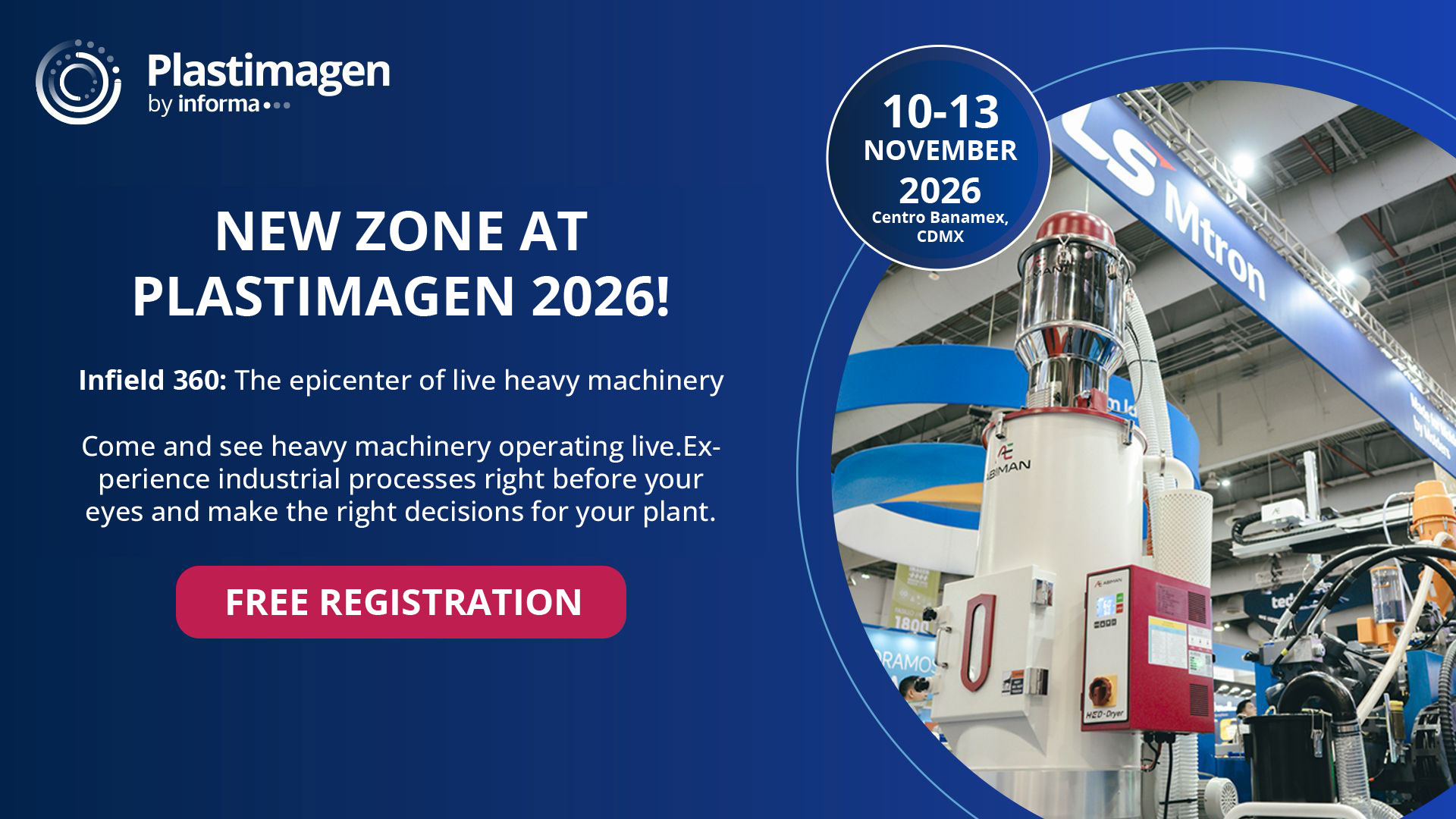
Gear Up for Plastimagen 2026!
Are you looking to supercharge your production lines, elevate your Overall Equipment Effectiveness (OEE), and discover the next wave of sustainable manufacturing? If your sights are set on the booming Latin American market, there is one premier destination you need to circle on your calendar: Plastimagen 2026.
Finding reliable suppliers and cutting-edge innovations can feel like searching for a needle in a haystack. That’s exactly why participating in top-tier global exhibitions is crucial for your business growth.
Whether you are seeking advanced injection molding machines, highly efficient extrusion lines, or breakthrough recycling technologies, Plastimagen is where the future of plastics is shaped.
Don't let your competitors take the lead. Click through to the official portal to register, and stay tuned for exclusive previews of the top suppliers who will be bringing their A-game to the show floor!
Let’s shape the future of manufacturing, together.
Click here to sign up! https://informa.infoexpo.com.mx/plastimagen/ae/2026/public/codigo/UHCE79794/en


SOCIO COOPERATIVO